The Weeknight Test Kitchen Reader offer: 60% off
Tested for 3 months

I tried 6 ways to sharpen my knives. Only one actually worked.

Bottom lineI went in skeptical — and it honestly changed how I cook. Five methods let me down over the years; the little Japanese roller is the one I now recommend to everyone I know.
Method Verdict
Pull-through gadget FAILED
Whetstone IN A DRAWER
Electric sharpener ATE THE BLADE
Sharpening service WORKS, BUT…
Honing rod NOT A SHARPENER
Buying new knives EXPENSIVE FAIL
Hatori rolling sharpener WORKED
1

The pull-through gadget — sharp for a week, then worse than before

FAILED

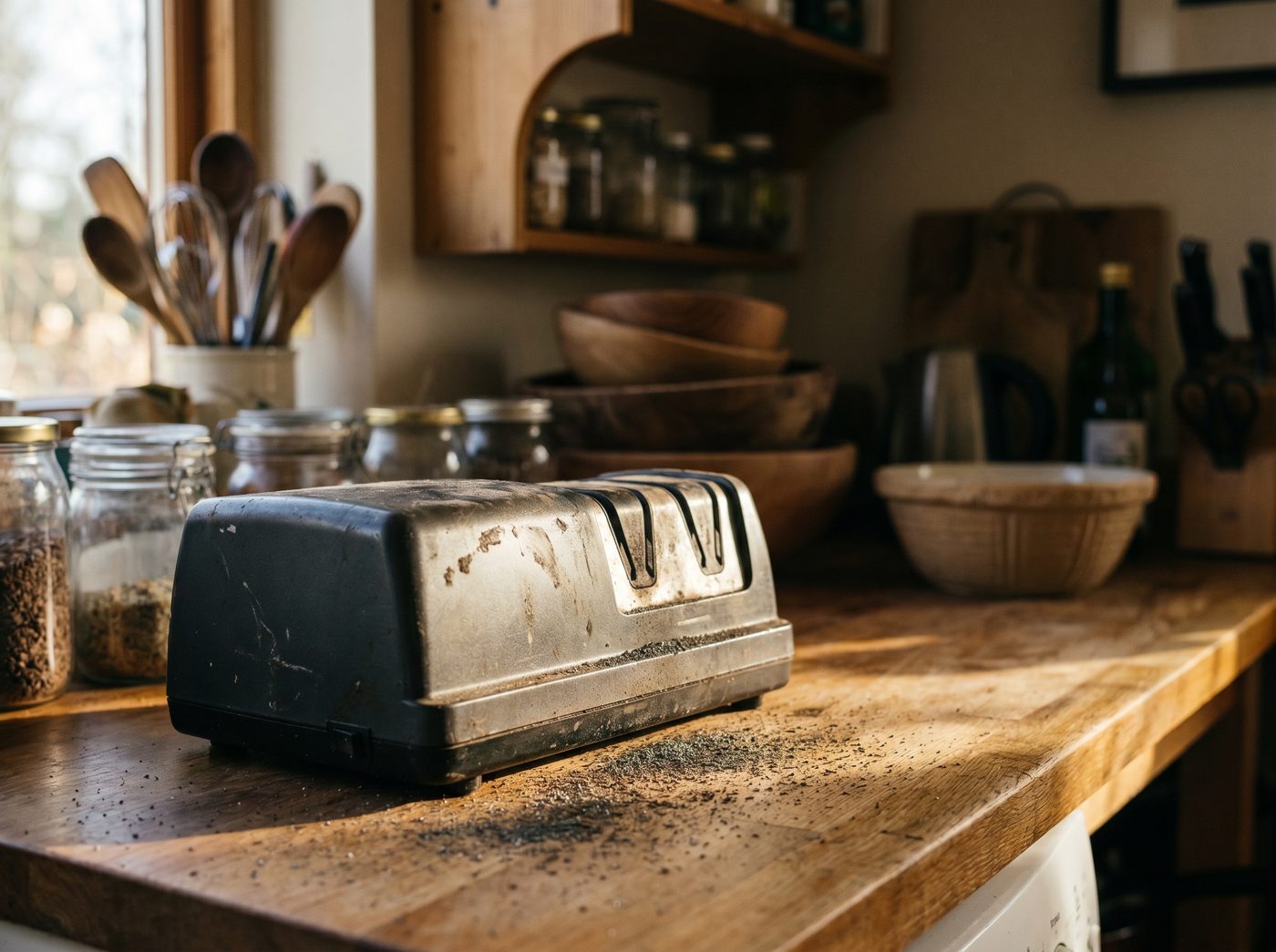
This is the one everybody owns, because it feels like it works. Drag the knife through, hear that horrible zip, and the edge does feel sharper — for about a week. Here's what's actually happening: the carbide notch tears steel off the edge in ragged strips. The thin, weakened edge folds over almost immediately, so you drag it through again. And again. You're not sharpening your knife; you're quietly sanding it to death. Mine took visible chips out of a blade I liked. Verdict: the reason your good knife died.
2

The whetstone — the “right” answer that lives in a drawer

FAILED

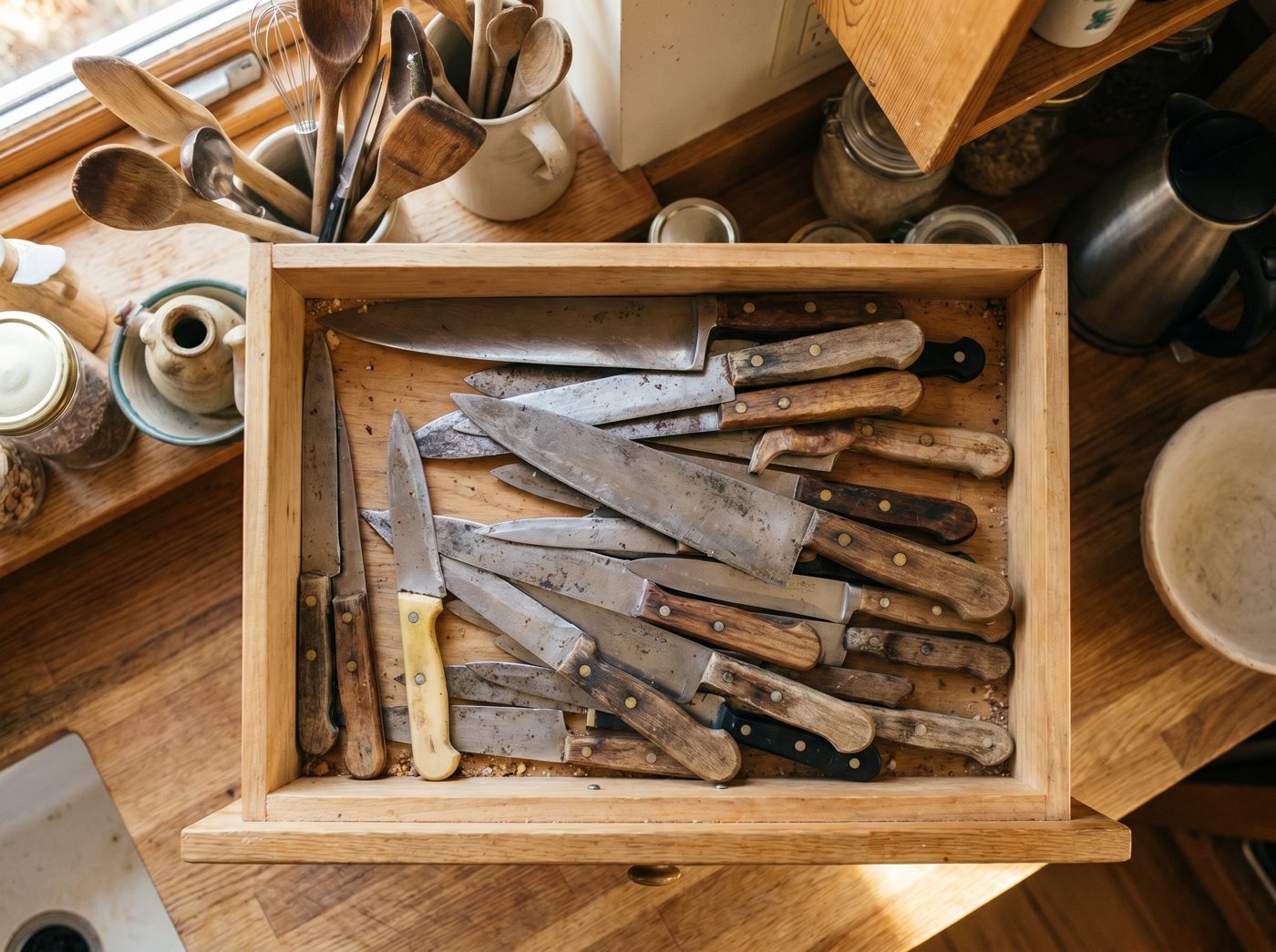
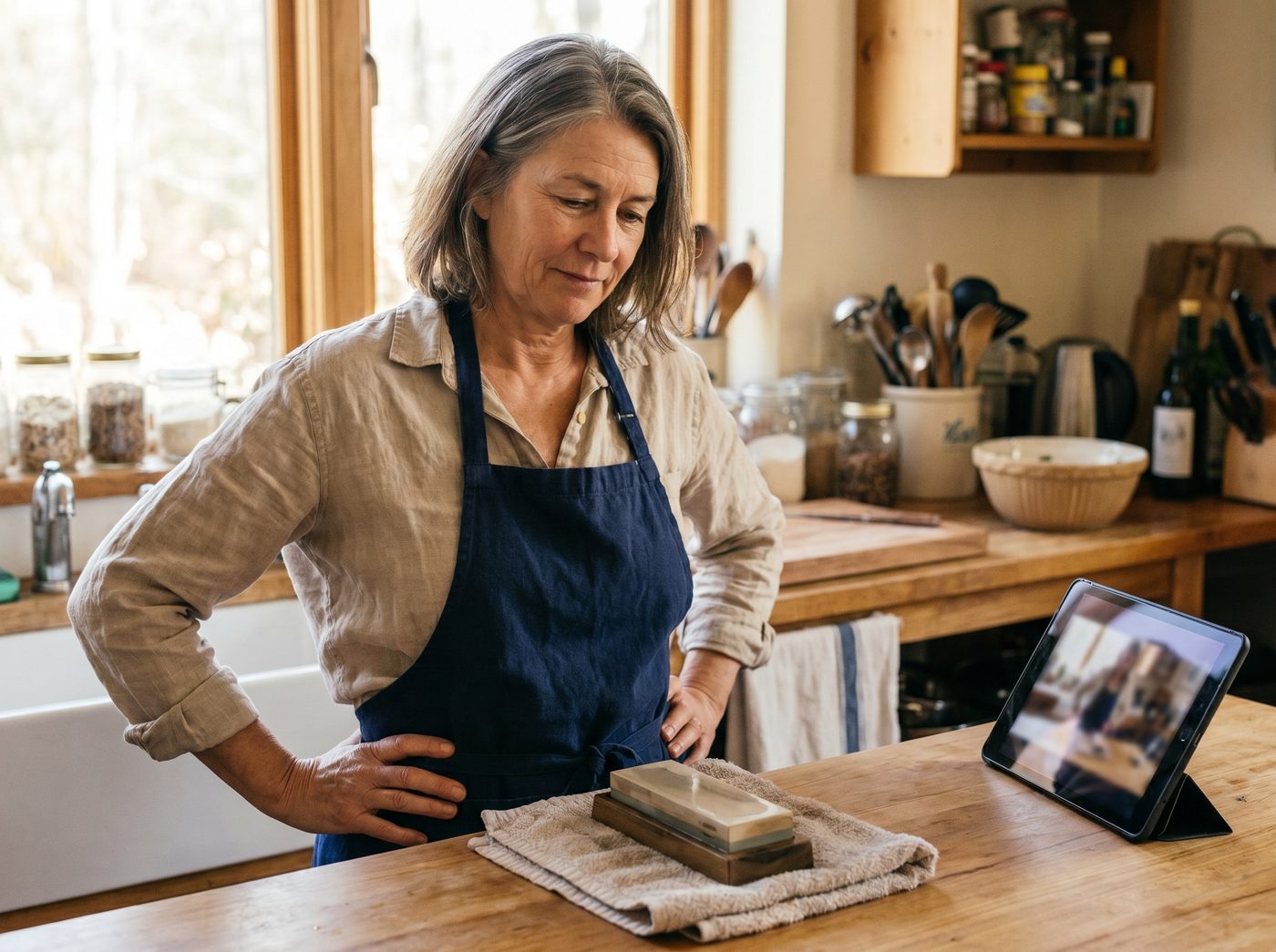
Every forum will tell you the whetstone is the correct answer, and they're right — for people who practice. What nobody says out loud: you'll be bad at it for a year. You have to soak it, hold a perfect angle freehand for twenty minutes, and know when you're done. I watched three tutorials, used it twice, got mediocre results and a guilty conscience. It's been in the drawer ever since, judging me. Verdict: I didn't fail at sharpening. I failed at homework I never signed up for.

Skip to the one that worked — 60% off
60-day money-back guarantee
3

The electric sharpener — it ate the blade

FAILED

The electric one is the pull-through's angrier sibling. It grinds fast, it grinds hot, and it grinds a lot — you can see the metal dust it takes off, and that steel is never coming back. The noise alone made me wince, and after a few sessions the tip of my utility knife had visibly changed shape. It shortens the life of your knives by years. Verdict: effective the way a belt sander is effective.

4

The sharpening service — sharp for a month, on subscription

WORKS, BUT…

The professional service actually works — the knives came back genuinely sharp. But look at what it costs you: a fee per knife, per visit. Drop-off, pick-up, and a week of cooking without your chef's knife. Recommended cadence, twice a year; actual dullness, back within a month or two because edges dull with every use. It's renting sharpness. Verdict: right result, wrong logistics, forever.

A fee per knife, per visit, forever — plus a week without your chef’s knife.

5

The “sharpening” rod — I was never sharpening at all

NOT A SHARPENER

This one hurt. That swish-swish rod routine I'd been doing for years, feeling like a real cook? A honing rod doesn't remove any material. It doesn't sharpen — it just straightens a bent edge so the knife seems sharper for a day. The thing most of us call a sharpening steel physically cannot sharpen a knife. Years of theater. Verdict: not a sharpener. Never was.

6

Buying new knives — the most expensive way to stay dull

EXPENSIVE FAIL

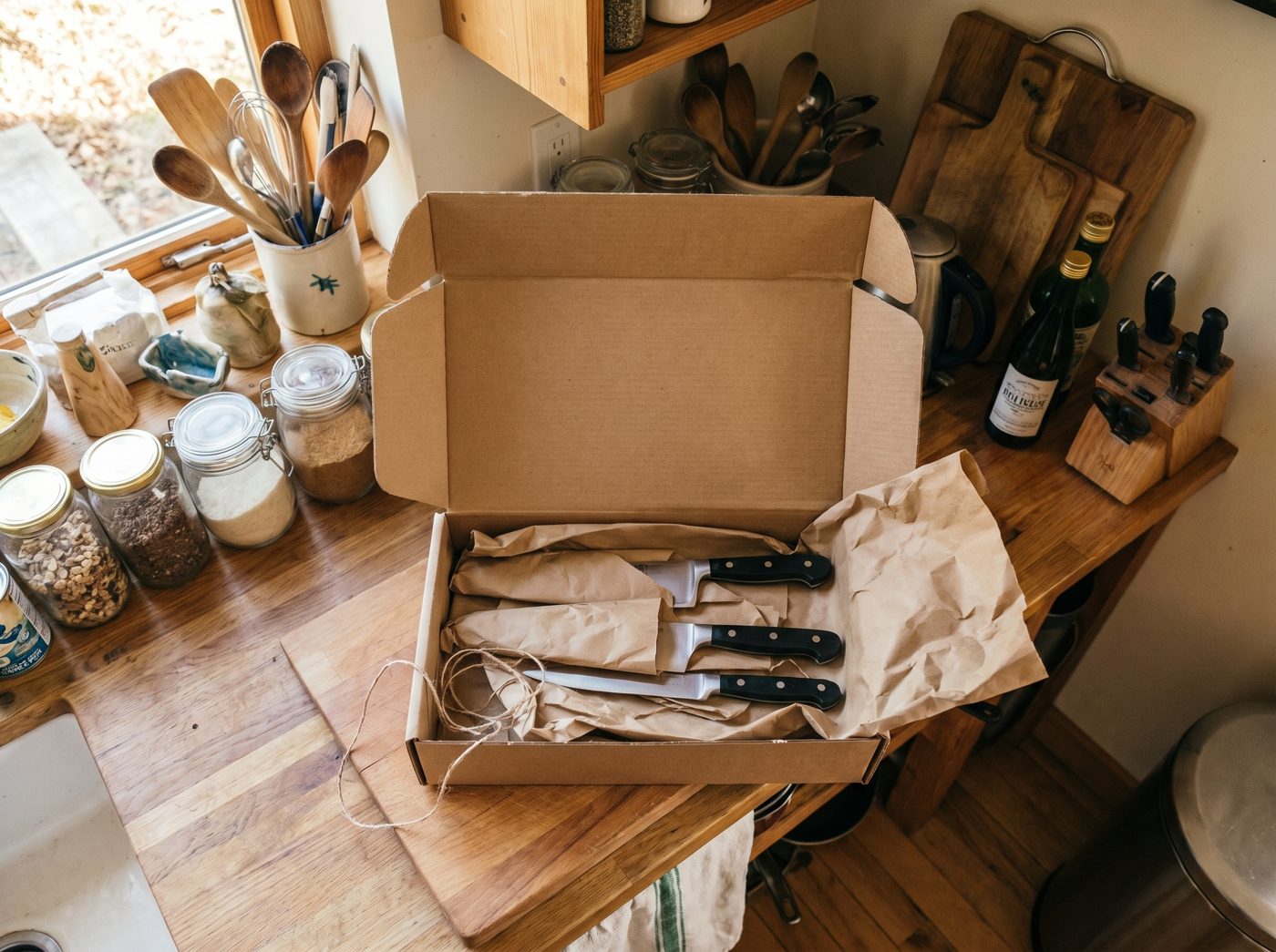
The quiet endgame of every failed gadget: just buy new knives. I did it too. Here's the math that stopped me: a well-maintained cheap knife out-cuts an expensive knife that never gets sharpened — and the new one is dull again in a few months anyway. Replacing the whole knife because you can't fix the edge is the drawer-of-failed-gadgets logic taken to its most expensive conclusion. Verdict: it was never the knives.

A new knife is dull again within months — and the cycle restarts.

7

The rolling sharpener — the one that actually worked

WORKED

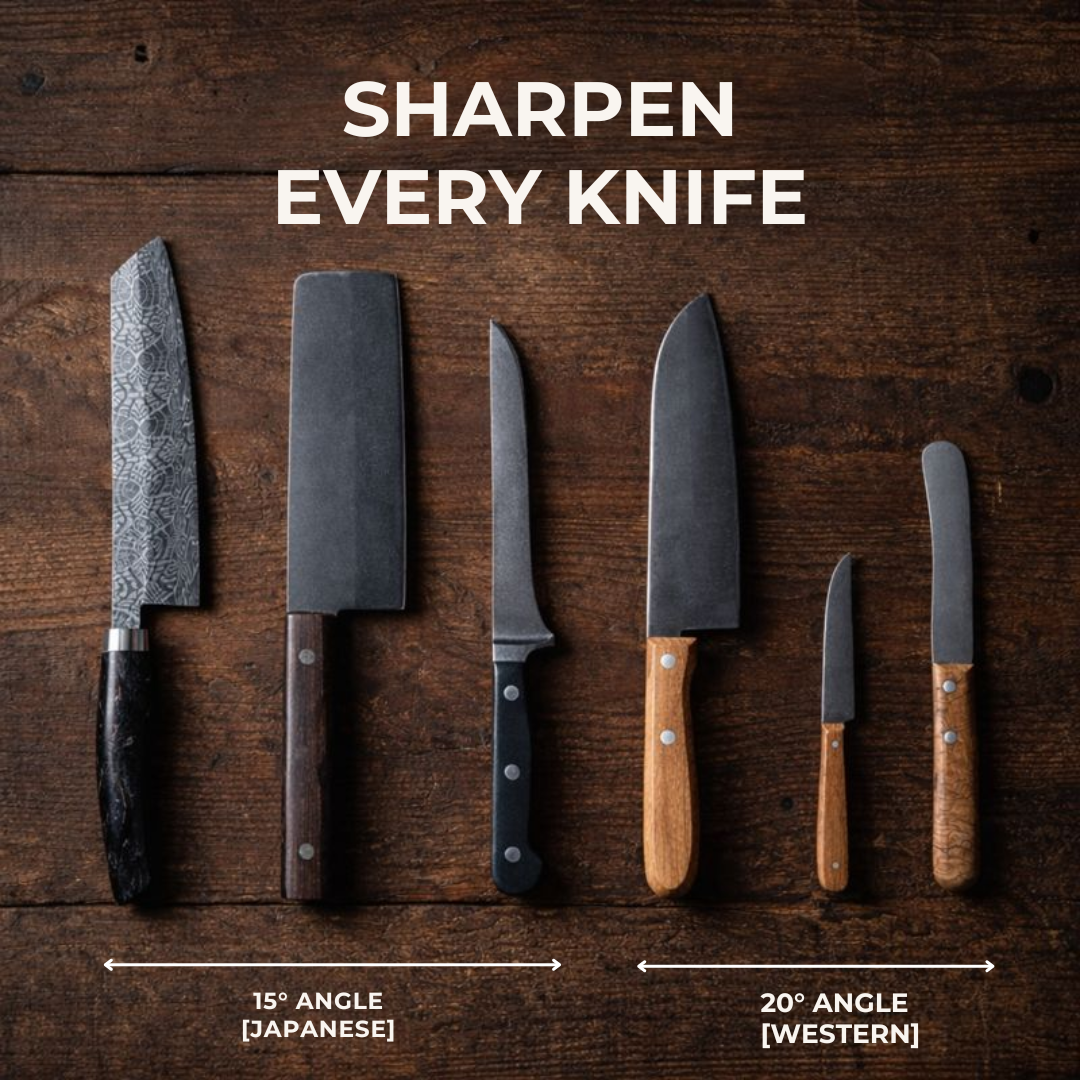
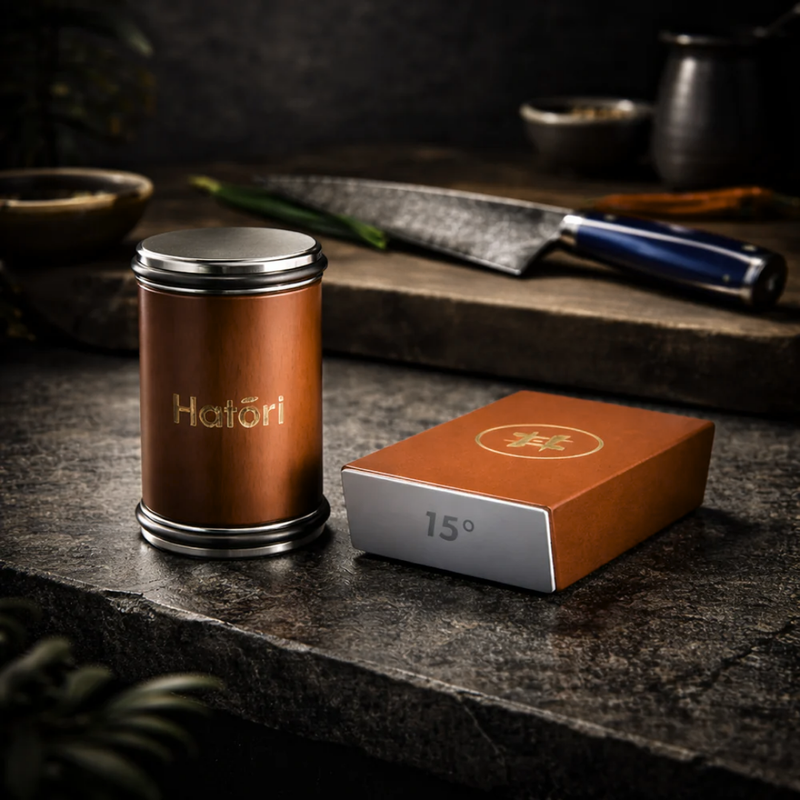
I'll be honest: I didn't expect much. But the mechanism made sense in a way nothing else in my drawer ever had, because it fixes the exact thing that let methods 1–6 down: the angle. The knife snaps flat onto a magnetic base machined at exactly 15° (Japanese knives) or 20° (Western). You roll the diamond-coated cylinder along the edge, and the base holds the angle for you — so the one skill I never managed to learn simply isn't required. My first knife took about two minutes, and it shaved paper into ribbons. By the end of that evening I'd done every knife in the house, and cooking has genuinely felt different since. I'm a little bit of a fan, and I don't say that lightly.

The paper test — day one

You don't have to trust me; this test is free. Hold a sheet of printer paper by one corner and slice down. A dull knife folds it or tears it; a sharp one drops straight through with a whisper. Every knife I rolled on the Hatori passed — including a supermarket knife I'd mentally retired. Do this with your own knives tonight and you'll know exactly where you stand.

The tomato test — the one that actually mattered

The tomato is the honest judge — skin that resists, flesh that bruises if you push. For years I sawed and squashed and assumed I just wasn't good at this. First tomato after sharpening: the knife fell through it. Paper-thin slices, no pressure, no sawing. That was the moment I understood it had never been my technique. It was the edge, the whole time.

Week three, month three — still sharp

Any sharpener can produce a good day one — the pull-through taught me that. The real question is week three. The diamond-polished edge holds because it's a clean, correctly-angled edge rather than a torn one that folds. When it eventually needs a refresh: twenty seconds a side, no soaking, no setup, while the pasta water boils. Three months in, every knife in my block still passes the paper test.

One base, the whole knife block

Chef's knife, santoku, paring knife, the good one you were scared to touch — if the edge is straight, the magnet holds it at the right angle. The 15° side is for Japanese blades, 20° for Western ones, and the base does the knowing for you. This is the part that finally de-escalated sharpening from “skill I should learn someday” to “thing I do while dinner cooks.”

The fine print I actually read

I read guarantee terms the way I read one-star reviews: looking for the catch. Here's what it says, plainly: 60 days, money back, no questions. Sharpen every knife you own, run your own paper and tomato tests, and if you're not convinced, send it back for a full refund. Solid hardwood and machined steel — it has the heft of a tool, not a dropshipped gadget. That's the deal. It's a good deal.

Get 60% off today
60-day money-back guarantee · free shipping
Limited-time offer

Get the Hatori Sharpener at60% off

Free shipping included. 60-day money-back guarantee.

Get the Hatori Sharpener at
★★★★★4.8/5 · 25,000+ orders shipped
Claim 60% offShips within 24 hours

What other recovering gadget-buyers say

Sorted by most skeptical first.

★★★★★

I own a whetstone I used twice after a YouTube binge, a pull-through, and a rod I waved around like a chef. This is the first one that survived contact with my actual weeknights — I'm honestly a little obsessed with it now.

Megan K. · Portland, OR · Verified buyer
★★★★★

I read the one-star reviews first, always. Ran the paper test expecting to send it back. It's staying — and I bought a second one for my mother.

Dave H. · Columbus, OH · Verified buyer
★★★★★

I genuinely thought I couldn't cook. Squashed every tomato for years and blamed my hands. First clean slice I nearly cried — it was never me, it was the edge.

Chloe B. · Bristol, UK · Verified buyer
25,000+
orders shipped worldwide
4.8/5
average customer rating
60 days
money-back guarantee

Run the paper test yourself

Sharpen one knife. Slice one sheet of paper, then one tomato. If it doesn't cut clean, send it back within 60 days and get your money back. That's the whole pitch.

  • Locked 15° / 20° angle — no skill required
  • Diamond rollers — polish, not grinding wheels
  • 60-day money-back guarantee, no questions
  • Works on the knives you already own
Get 60% off today60-day money-back guarantee · free shipping
Hatori Sharpener —60% off + free shipping Claim offer