At 78, I Believed My Hands Had Cooked Their Last Meal. I Was Wrong About What Was Broken.
After the diagnosis, the drawer full of "solutions", and two years of her daughter doing the cutting for her, a 78-year-old grandmother writes the letter she wishes someone had sent her in 2024.
If you know exactly which knife in the drawer still works, and you guard it —
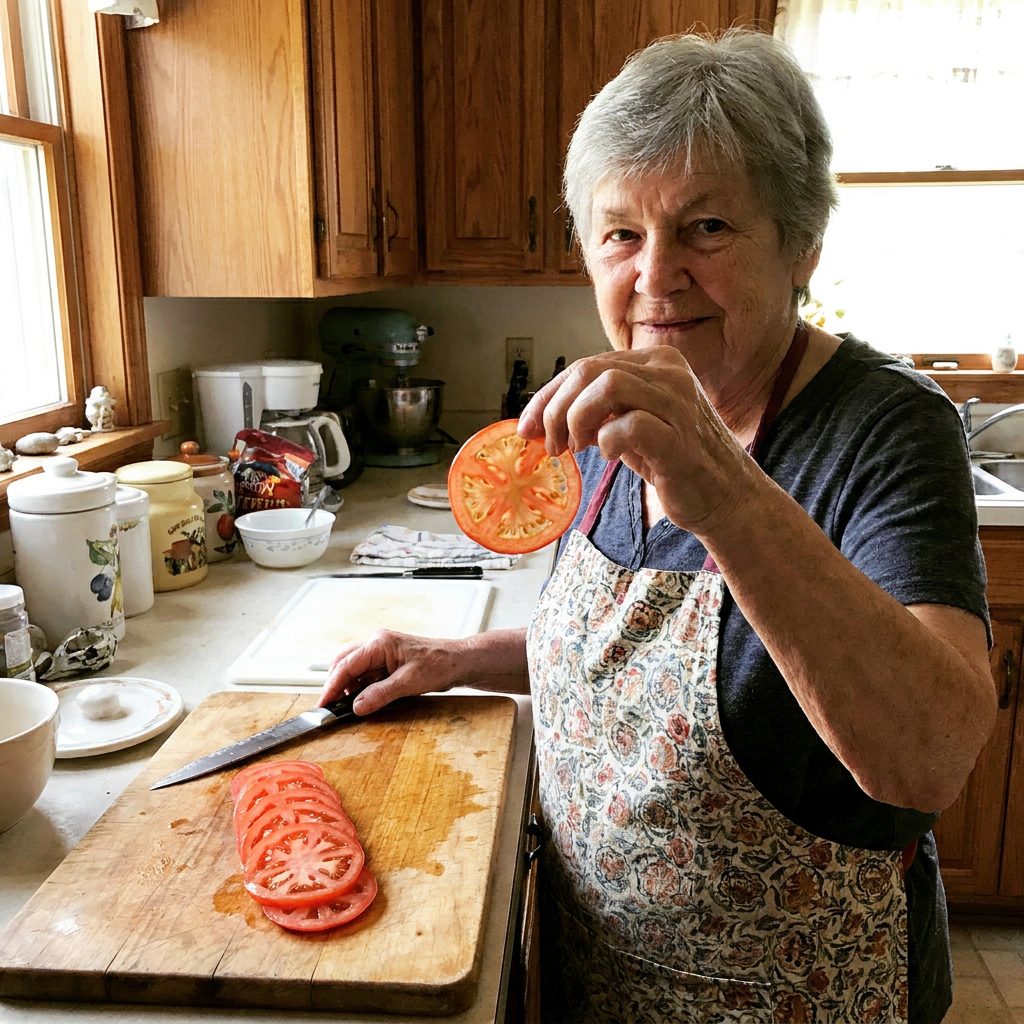
If your tomatoes get squashed now instead of sliced, and you've started blaming the tomatoes —
If you've quietly handed the squash to someone else to cut, or started "preferring" food that doesn't need a knife —
If you've ever stood in your own kitchen and felt like a guest in it —
Then I'm writing this for you. Because until this spring, I was you.
How Bad It Got
I cooked for my family every day for fifty years. Sunday roasts. School lunches. Soup the moment anyone sniffled. Forty Thanksgivings in the same kitchen, with the same knives.
Then, somewhere in my seventies, my hands began to change. My doctor has a name for it. My friends all have their own versions — a wrist that quits by evening, fingers that can't open a jar, a grip that empties out a little earlier every year. The name doesn't matter. What matters is what it took: an onion started costing me twenty minutes.
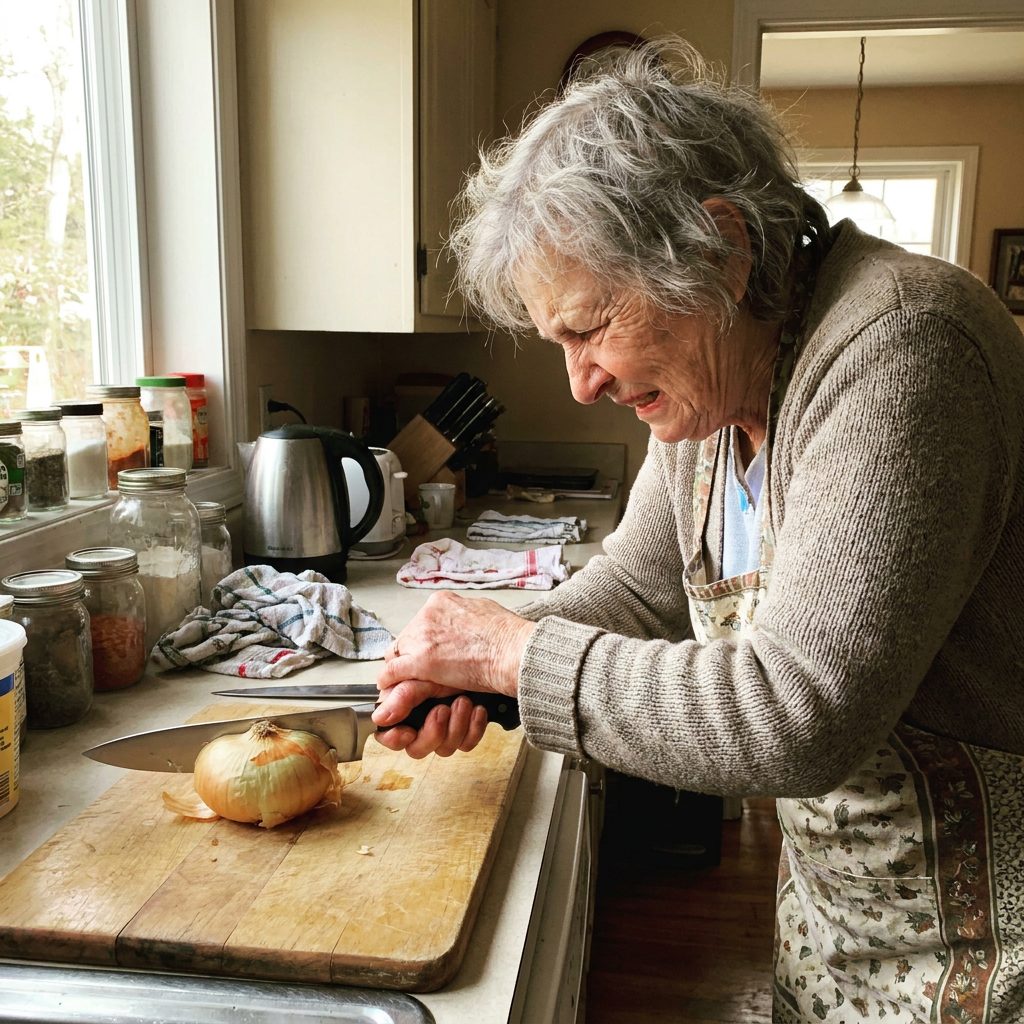
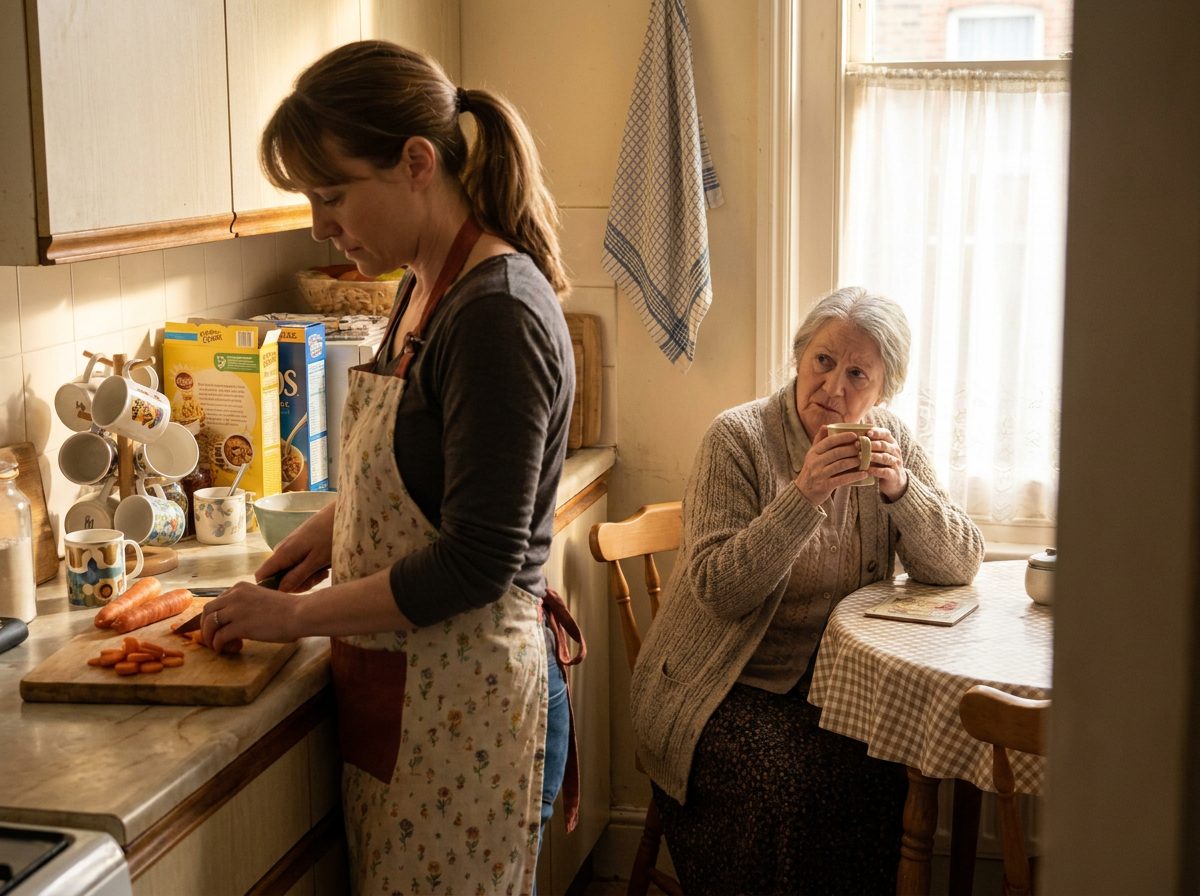
I would stack both palms on the back of the blade and lean my whole body into it, and the onion would squash instead of open. So my daughter started coming over on Sundays to do my cutting for me. She was kind about it. I hated it. Not the help — the meaning of it. Cooking was the last thing in that house that was entirely mine.
Everything I Tried — and What Each One Cost Me
I want to list what I tried, because I suspect your drawer looks like mine did.
The new knives. Everyone's first answer. A beautiful knife arrived every Christmas — each one cut like a dream for a few months, then joined the drawer of expensive knives that no longer do. Nobody tells you steel goes dull at every price.
The pull-through gadget. The little plastic one with the slots. It felt sharp for a week. What I know now: it doesn't sharpen the edge, it tears steel off it in ragged strips, and the knife dies a little more every time you "fix" it. That gadget quietly ruined my two best knives and let me blame my hands for it.
The whetstone. My son-in-law swears by his. He also has thirty years of practice and hands that don't shake. A stone asks you to hold one perfect angle, freehand, for twenty minutes. It asks for exactly the two things time had already taken from me: a steady hold and strong wrists.
The electric grinder. Fast, yes. It also ate visible metal off my mother's carving knife. I unplugged it and never forgave myself.
Every fix on that list was built for somebody else's hands. And every time one failed, I didn't blame the tool. I blamed me.
The Tomato That Changed My Mind
There's a woman on my street who is older than I am, and she still cooks everything herself. Her knives are older than mine. One afternoon I watched her lay a tomato on the board — and the blade went down through it under its own weight. She wasn't strong. She barely touched it. The tomato came apart into slices you could nearly read through.
I asked about her knife, expecting a story about expensive Japanese steel. She laughed at me and said the knife was nothing special. Then she said the sentence I want you to keep:
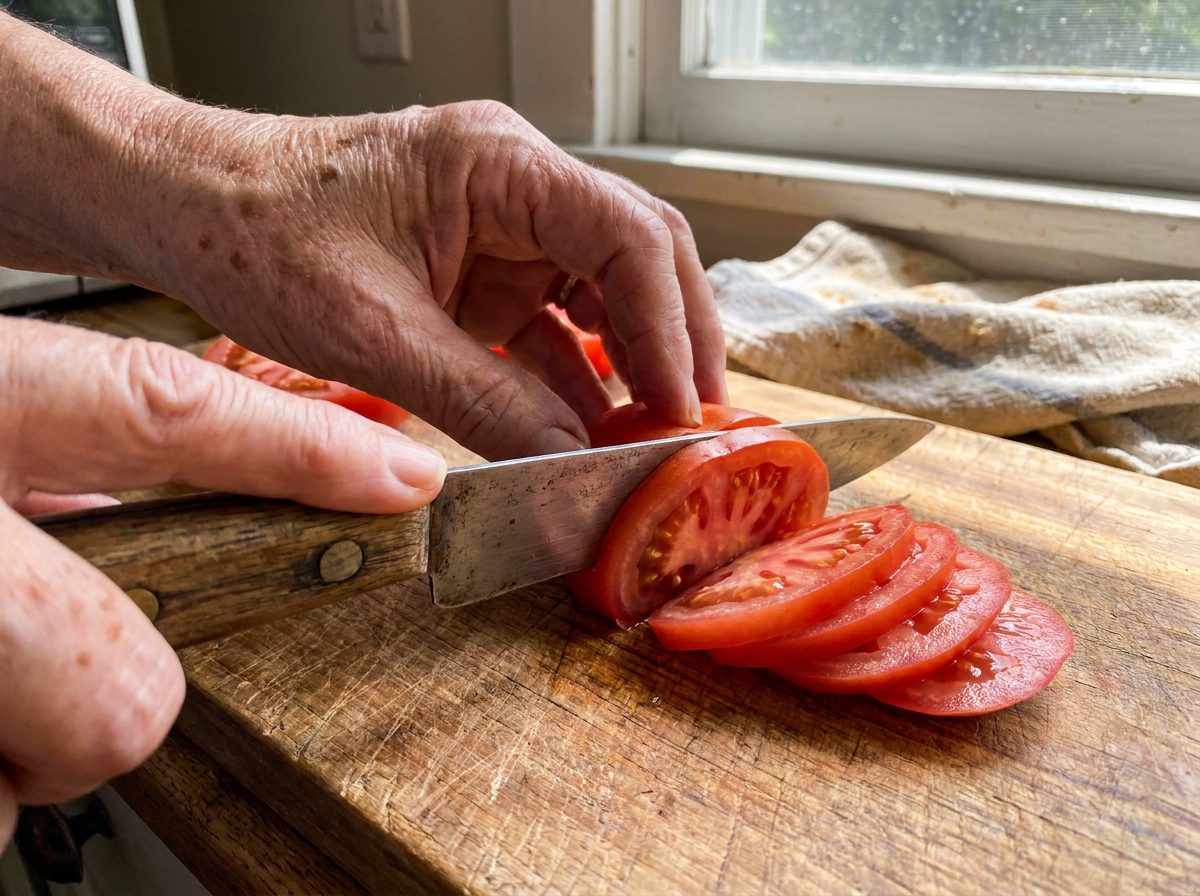
Think of it like a screen door with a rusted spring. You can shove it harder every year — or you can oil the spring, and suddenly the door swings the way it did when it was new. My knives weren't old. They were dry. Every one of them.
The Thirty Seconds
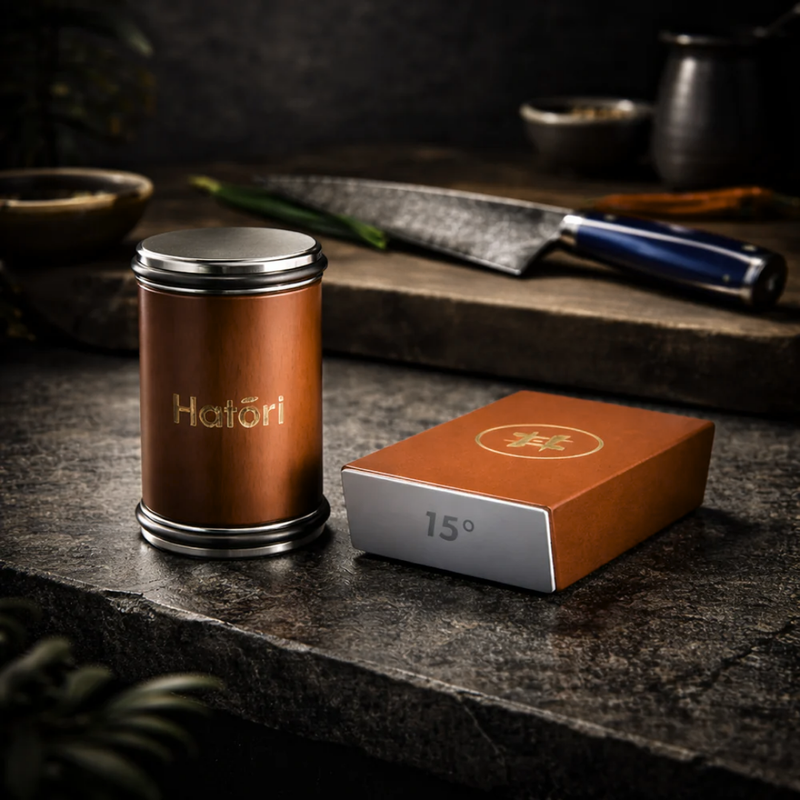
She kept one thing next to her cutting board, where other kitchens keep the pepper grinder: a little Japanese roller — the Hatori rolling sharpener.
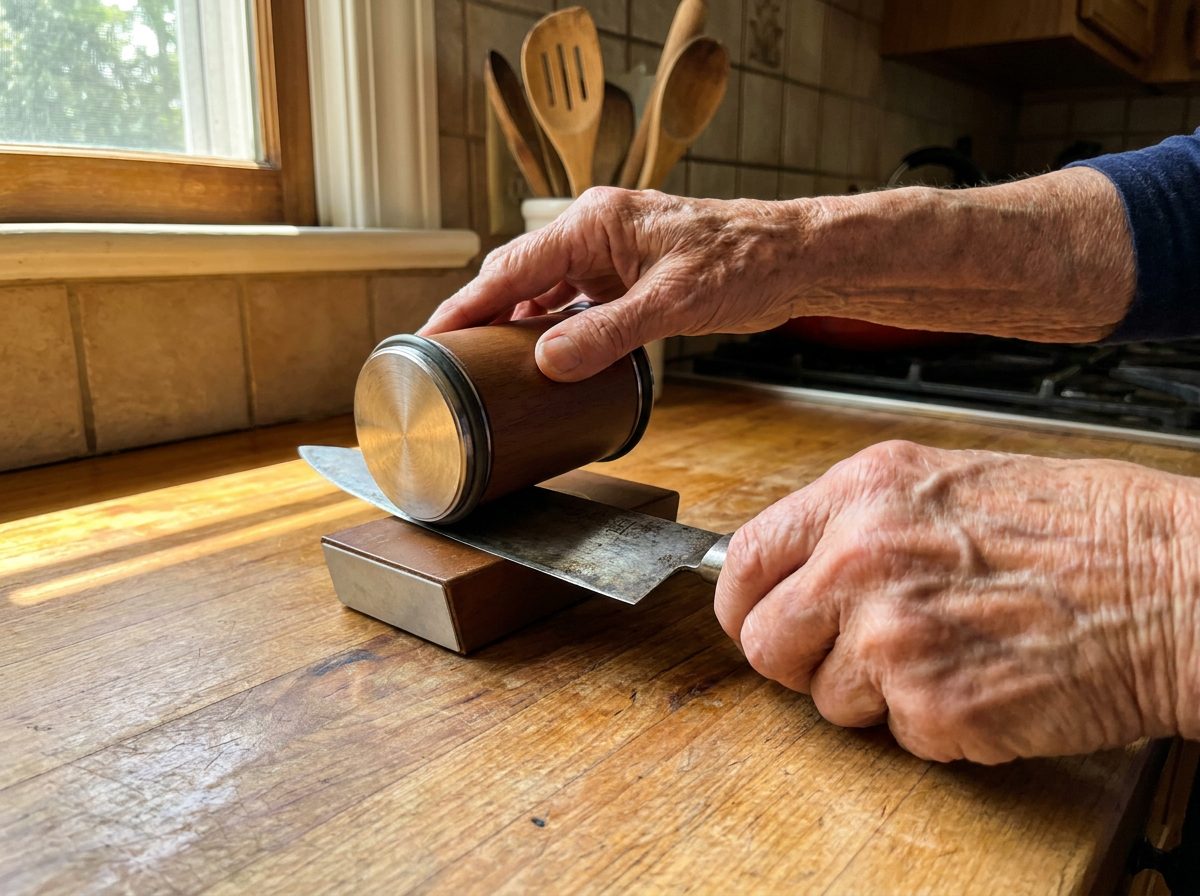
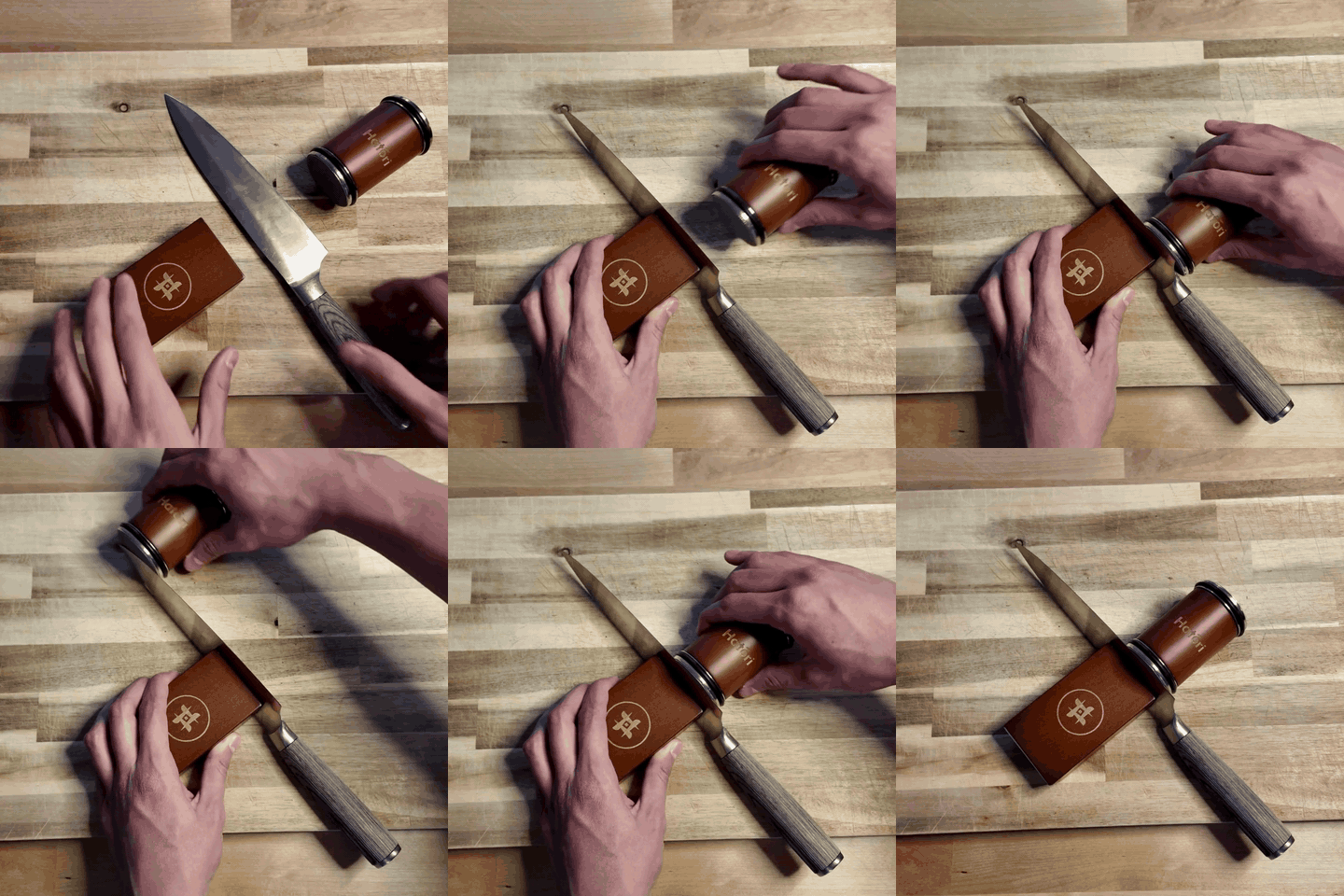
Here is the whole trick, and it's the reason this works for hands like ours. The one part of sharpening that's genuinely hard — holding the exact same angle down the whole edge, every stroke — is the part you don't do. The knife clicks flat onto a magnetic base, and the base holds that perfect angle for you. You just roll the sharpener along the edge a few times. No pressing. No skill. Nothing to hold steady.
She did my knife while I stood there in her kitchen. Thirty seconds. It was the same knife I had fought for two years — and it fell through a tomato like the tomato wasn't there.
And this is the part I need you to hear: every single "failure" in my drawer suddenly made sense. The expensive knives failed because they went dull like all knives do. The pull-through failed because it was eating the edge. The stone failed because it demanded young hands. It was never me. It was never my hands. It was the angle, all along — and now something holds the angle for me.
What the First Month Gave Back
Day one. I did every knife in the house at my own counter. It took less time than the kettle. I made dinner that night for the first time in two years, and I cried doing it, and it wasn't about the onion.
Week one. I called my daughter and told her Sunday was mine again. She came anyway. She sat at the table while I cooked, which is the correct arrangement.
Week four. I carved a Sunday roast at the table, in front of everyone, in thin slices, with my mother's fifty-year-old carving knife. My grandson asked why I was smiling at a chicken.
I'm not going to tell you a kitchen tool cured anything. My hands are still seventy-eight years old. But cooking doesn't ask them for strength anymore — the edge does the work now, the way it did when we were both younger.

If someone you love has gone quiet in the kitchen — or if that someone is you — the little roller is below. It's the smallest thing in my kitchen, and it gave me back the biggest one.
— Margaret
From cooks with hands like ours
The first roll is usually all it takes.
I'm 81 and I have arthritis in both hands. I roll my knives while the kettle boils and they cut better than they did new. I haven't asked my son to cut anything since it arrived.
Bought it for my mother after I watched her fight a butternut squash for ten minutes. She phoned me the same evening about a tomato. Best gift I've given her in twenty years.
I have a tremor in my right hand and was certain this wasn't for me. There is nothing to hold steady — the magnet does it. First time in years I've enjoyed making dinner.
The questions I asked before I believed it
Especially the old ones. If a knife has a straight edge, it clicks onto the base — chef's knives, carving knives, paring knives, the supermarket one with the bent tip. The base has one side for Japanese blades (15°) and one for Western blades (20°), and the magnets choose the fit for you. My best knife is older than my daughter; it now outcuts anything in a shop. (Serrated bread knives are the one exception — those stay as they are.)
It's the opposite, and the difference is measurable. A pull-through scrapes steel off your edge in strips — that's why the sharpness dies within a week and the knife gets worse every year. The Hatori's diamond rollers polish the edge at one locked angle and remove almost nothing. One rebuilds the edge; the other slowly deletes your knife.
This is the question I asked, standing in my neighbor's kitchen, and here is the honest answer: there is nothing to hold steady. The magnets hold the knife. The base holds the angle. Your only job is to roll a small wooden roller back and forth a few times — it weighs about as much as a full coffee cup. If you can butter toast, you can do this.
Then it goes back and you get your money back — you have 60 days, and you'll know by the first tomato. Roll it down your worst knife the day the box arrives. If that knife doesn't glide through a tomato under its own weight, send it back. No forms to argue with, no store credit games.
Get the Hatori Sharpener at60% off
Free shipping included. 60-day tomato-test guarantee — you'll know by the first slice.
Comments






The knife was never worn out. Neither are you.
Update, July 2026: this letter has been shared far more than we expected and the current batch is moving quickly. If the offer above is still showing, it's still available — and if someone you love has gone quiet in the kitchen, this is the smallest gift that gives the biggest thing back.
- Thirty seconds per knife — no strength, no skill, nothing to hold steady
- Works on the knives you already own, including the decades-old ones
- Magnetic base holds the perfect angle so your hands don't have to
- 60-day money-back guarantee — you'll know by the first tomato